
Coat of Arms Project: A Step by Step Guide for Students
A coat of arms project, step by step: plan the design, pick symbols you can explain, choose colors and a motto, then write up what each part means.
By the Coat of Arms Creator team
A coat of arms project asks you to design a shield that stands for you, your family or a character, then explain what each part of it means. Most teachers grade the explanation harder than the artwork, so pick symbols you can defend in one sentence each.
This guide takes the assignment in order: planning, symbols, colors, the motto, finished examples, the write up, and notes for running it with a whole class.
What a coat of arms project usually asks for
Most versions of the assignment want five things:
- A shield, usually split into sections.
- One symbol in each section.
- A color scheme you can explain.
- A motto, sometimes in Latin.
- A paragraph or short talk on the meaning.
Check the rubric before you plan. If the write up is worth more than the drawing, spend your time on reasons rather than shading.
One fact earns easy credit. A coat of arms is only the design on the shield. The figure on top of the helmet is the crest, and the full display with helmet, scroll and side figures is called an achievement. The parts of a coat of arms guide names every piece, and most classmates will call the whole thing a crest.
Plan the design before you draw
Write first, draw second. Students who start with a pencil end up with a crowded shield and no reasons.

List six to eight true things about your subject. A sport, an instrument, a job, a country, a language spoken at home, a pet, a saying your family repeats. Then cut the list to four. Four ideas fit a quartered shield and still leave room to draw.
Fill in a table like this before you touch the shield:
| Section | Idea | Symbol | Why it fits |
|---|---|---|---|
| Top left | Family came from Ireland | Harp | Grandparents born in Cork |
| Top right | Swim team | Three wavy bars | Water, three years on the team |
| Bottom left | Reading | Open book | Reads every night |
| Bottom right | Family saying | Oak tree | “Stand steady” |
Holes in the table become holes in the write up.
Print the outline instead of drawing it freehand. The printable shield templates include blank, quartered and divided shields on letter pages, so your lines stay straight and your sections come out even.
Choosing symbols a student can explain
Pick symbols with one clear reason behind them. A lion because the family name means lion is a good answer. A lion because lions look strong is the answer that loses marks.
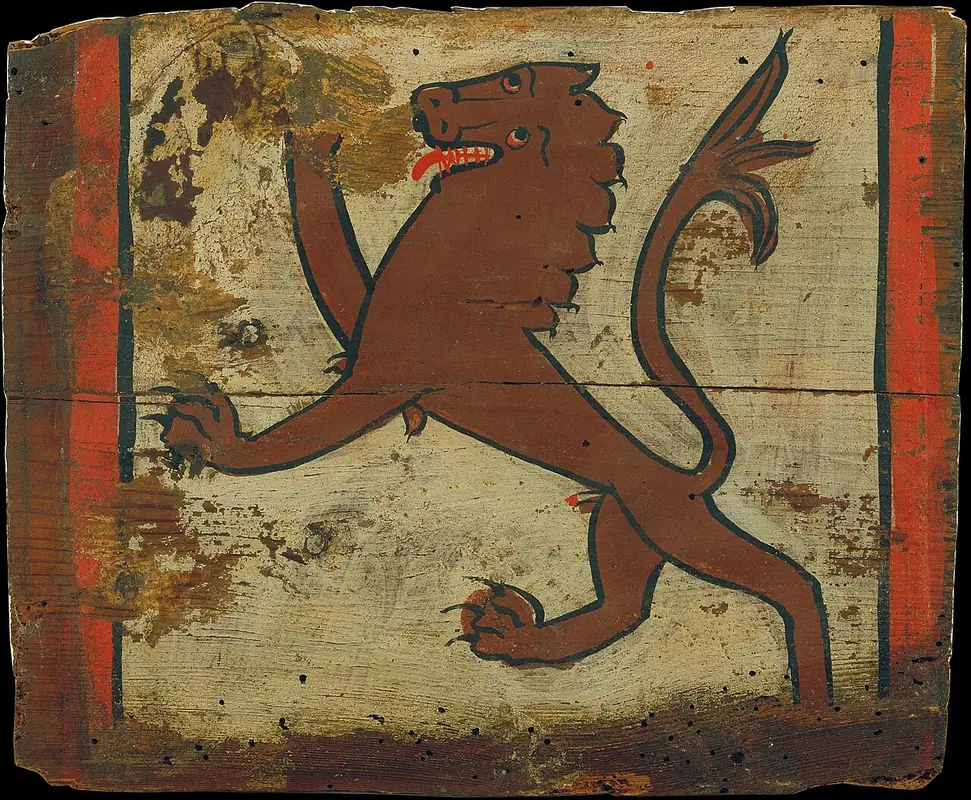
Traditional meanings are a loose tradition, not a fixed code, and different books list different ones. Treat them as a starting point, then say why the symbol fits your subject. The guide to symbols and their meanings covers the common animals, plants, tools and shapes.
Three rules of thumb:
- Simple shapes beat detailed scenes. Heraldry is built to be read from a distance.
- One symbol per section. Crowding is the most common mistake.
- Draw what you can actually draw. A clean book beats a melted dragon.
Picking colors and a motto
Heraldry uses a small palette with old French names. Two are metals and five are colors.
| Name | What it is |
|---|---|
| Or | Gold or yellow |
| Argent | Silver or white |
| Gules | Red |
| Azure | Blue |
| Sable | Black |
| Vert | Green |
| Purpure | Purple |
Two or three of them is plenty for one shield. The heraldry colors page lists the meanings often attached to each.
There is one real rule worth putting in your write up. Do not place a color on a color or a metal on a metal: red on blue goes muddy, and gold on silver disappears. The rule of tincture explains why, and naming it shows you read past the first page.
A motto is a short phrase on a scroll, usually two to five words. English is fine. If you want Latin, borrow a tested phrase with its translation from the Latin mottos list instead of running your own sentence through a translator, because the grammar rarely survives.
Finished coat of arms examples for students
Three that work, and why:

- A quartered shield with a harp, three wavy bars, an open book and an oak tree, drawn in red and gold with silver bars. Four sections, four reasons, two tinctures.
- A shield split down the middle, gold with a green oak tree on one side, red with a silver anchor on the other. Motto: “Rooted and ready.” The write up says the family farmed, then went to sea.
- A book character shield for a novel study: black field, one silver key, motto “I keep the door.” Every choice points at the plot.
More finished shields, built by adults but useful as models, sit in the personal coat of arms examples guide.
Writing up the meaning
Use the same sentence frame for each section and the paragraph writes itself.
- Name the part: “The top left section shows a harp.”
- Give the reason: “The harp stands for Ireland, where my grandparents were born.”
- Name the colors: “The field is azure and the harp is or, so a metal sits on a color.”
- Close with the motto and its translation.
Then add one more sentence about what the shield says about the subject as a whole. Teachers look for that line.
Running it as a class activity
For younger children, give choices instead of free rein: one animal, two colors, one object, read out from short lists. One big blank shield per page, thick lines, crayon friendly.
For older students the quartered shield works well, and you can add the real history. Quartering shows arms combined by marriage, which is why old arms sometimes carry sixteen compartments.
Print one test copy before you run thirty. Cardstock for markers and paint, copy paper for pencil. Finish with a gallery walk where each student reads one sentence about someone else’s shield, because explaining a classmate’s symbols is the part that sticks.
Build it with the Coat of Arms Creator
Once the sketch is settled, rebuild it in the free Coat of Arms Creator on the home page. Choose a shield shape and a division, set the tinctures, drop in charges, type the motto on the scroll, then download it as a PNG for a poster or a PDF to print at full size. No account and nothing to install, so a whole class can open it at once.
Frequently asked questions
What is a coat of arms project?
It is a school assignment that asks you to design a shield standing for yourself, your family or a character, then explain the meaning of each part. Most versions want a divided shield, one symbol per section, a short color scheme, a motto, and a paragraph or talk explaining your choices. The explanation usually carries most of the grade.
What should I put on a coat of arms for school?
Put four ideas you can explain in one sentence each. Pick things that are true: where your family came from, a sport or instrument, a job, a pet, a language spoken at home, a saying your family repeats. Give each idea one simple symbol, use two or three colors, and add a short motto on the scroll.
What are some coat of arms examples for students?
A quartered shield with a harp for Irish grandparents, three wavy bars for the swim team, an open book for reading and an oak tree for a family saying. For a novel study, a black field with a single silver key and the motto "I keep the door." Both work because every choice points at something real.
How do you make a coat of arms for kids?
Give choices instead of free rein. Offer one animal, two colors and one object from short lists, and hand out one big blank shield per page with thick lines that survive crayon. Younger children draw first and talk about reasons after. Older students can plan on paper, then rebuild the design on screen so it prints cleanly.