
Heraldry Meaning: What Heraldry Is and How It Works
Heraldry meaning explained in plain English: what heraldry is, how arms, crests and achievements fit together, the terms to know, and who regulates arms today.
By the Coat of Arms Creator team
Heraldry is the system for designing, describing and recording coats of arms. That is the plain answer to “what is heraldry” and “heraldry meaning”: a set of rules for identifying a person, family or organization by a design on a shield, plus a precise vocabulary for writing that design down so anyone can redraw it. It started in medieval Europe, when armored knights needed to be told apart at a distance, and it carried on long after armor stopped being useful. Newcomers often meet heraldry through one piece of it, such as a strange color name or a block of old-sounding text. This guide shows how the pieces fit.
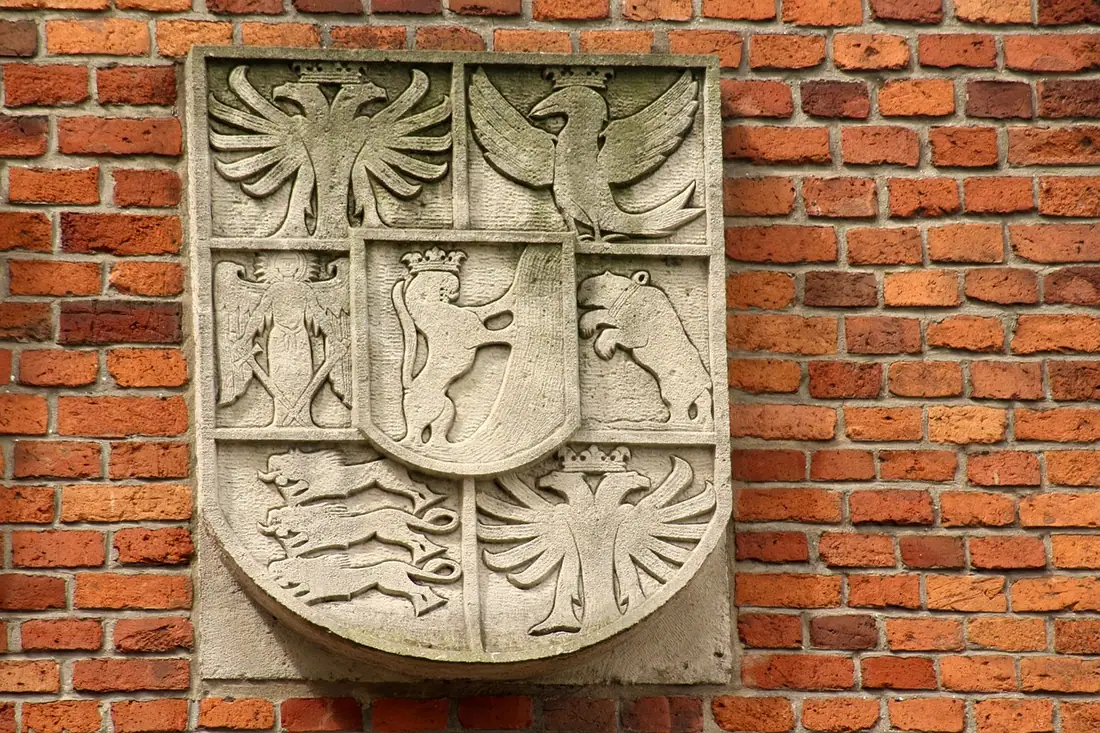
How heraldry works, in three parts
Heraldry explained simply has three moving parts.
The first is the design itself: a shield, a background, and symbols placed on it. The second is the description, written in heraldic language so the design can be reproduced without copying a picture. The third is the record. In several countries an official body grants arms to one person or institution and registers them, which is what keeps arms from being duplicated. Take any of those three away and you still have a nice drawing, but not heraldry in the full sense.
Arms, crests and achievements
The words get mixed up constantly, so it helps to separate them early.
A coat of arms, strictly, is the design on the shield and nothing else. A crest is the figure that stands on top of the helmet above the shield, such as a lion, a bird or an arm holding a sword. An achievement is the whole display: shield, helmet, torse, mantling, crest, motto, and sometimes supporters standing on either side.
So “family crest” used for a whole design is loose talk, and most heralds will correct it. Nothing breaks if you say it, but knowing the difference makes every other heraldry page easier to read. The parts of a coat of arms guide walks through each element in the stack and shows which ones are optional.
The six things every design needs
Every set of arms, from a medieval knight’s to one you build this afternoon, comes down to the same short list.
- A shield shape. Also called the escutcheon. The outline matters less than what sits inside it.
- A field. This is the background of the shield, the surface everything else sits on.
- Tinctures. These are the heraldic colors: the metals or (gold) and argent (silver), the colors gules (red), azure (blue), sable (black), vert (green) and purpure (purple), plus furs such as ermine and vair.
- A division or a plain field. The field can be one tincture or split into sections by a line, which is where terms like per pale and per fess come from.
- Charges. A charge is anything placed on the field, from a lion to a star to a broad geometric band.
- Contrast. This is the one real design rule in heraldry, and it exists so arms stay readable at a distance.
The ways a field can be split, and the broad bands called ordinaries, are set out in the guide to heraldic divisions and ordinaries. The contrast rule has its own page, the rule of tincture, which explains why you avoid color on color and metal on metal.
Why arms are described in words
This is the part that surprises people most. In heraldry the written description is the official version, not the drawing.
That description is called a blazon. It reads like a formula: the field first, then the main charges, then smaller details, each with its tincture named after it. Something like “Azure, a bend or” means a blue shield with a gold diagonal band. Two artists working from the same blazon will produce pictures that look different in style but match in every heraldic detail.
There is a reason for the odd word order and the dropped punctuation. Arms had to be recorded, checked against existing arms and passed on, long before anyone could photocopy an image. A tight verbal formula does that job better than a sketch. If the syntax looks impenetrable, how to read a blazon takes it apart one clause at a time.
Who looks after heraldry today
Authority over arms depends on the country, and that trips up a lot of searches.
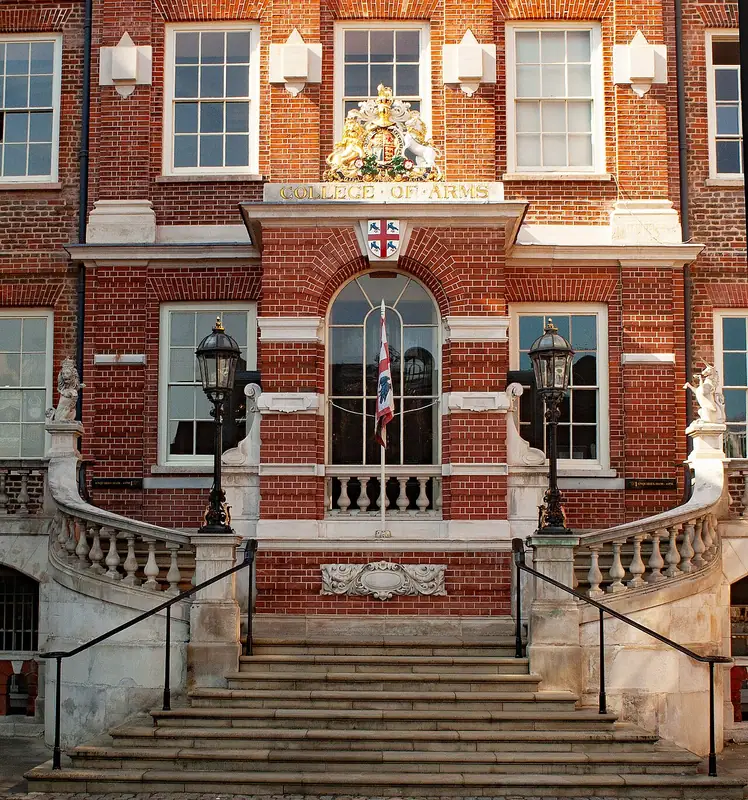
In England, Wales and Northern Ireland, grants of arms come from the College of Arms. Scotland has the Court of the Lord Lyon, where misuse of arms is a legal matter. Ireland has the Office of the Chief Herald, Canada has the Canadian Heraldic Authority, and several other countries keep registers of their own. Spain, Sweden, the Netherlands and South Africa all have their own arrangements.
The United States has no official heraldic authority for personal arms, though the country has its own coat of arms on the Great Seal. Americans can design and use arms freely, and private registries exist, but nobody can issue an American grant because there is no granting body. That also means no company can sell you “your” family arms, since arms belong to individuals and their descendants rather than to surnames.
Where heraldry shows up in modern life
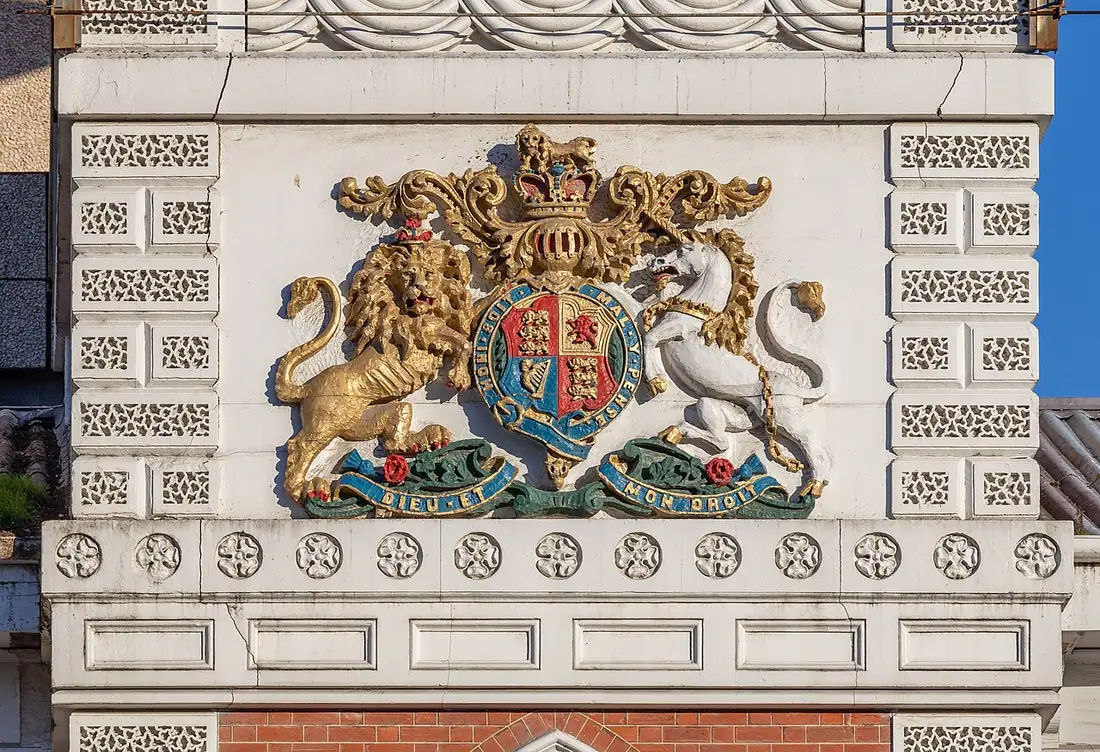
Heraldry did not stop when plate armor did. National arms appear on passports, coins, courts and embassies. Universities, schools, cathedrals, regiments, cities and livery companies use arms as formal identity, usually beside a simpler modern logo. Football clubs built badges on heraldic lines, which is why so many have shields, lions and castles.
On a personal scale, arms turn up on signet rings, wax seals, bookplates, stationery, glassware and wedding invitations. The uses of a coat of arms page covers the practical side, including what you can and cannot claim about a design you make yourself.
Where to read next
If you want the whole vocabulary in one place, the heraldry glossary defines the terms a blazon throws at you, from chief and fess to rampant and passant. Read the parts guide for the anatomy, the divisions guide for field shapes, the tincture rule for color choices, and the blazon guide last, once the words mean something.
When you want to stop reading and start drawing, the Coat of Arms Creator on the home page builds a design in your browser. Pick a shield, set the field and tinctures, add charges, a crest and a motto, then download it. It is free, and it keeps the contrast rule in view while you work.
Frequently asked questions
What is heraldry?
Heraldry is the system of designing, describing and recording coats of arms. It covers the picture on the shield, the vocabulary used to write that picture down, and the authorities that grant and register arms. It began in medieval Europe as a way to identify armoured knights, and the same rules still shape arms used by families, cities and institutions.
How does heraldry work?
Three parts work together. First a design is built from a shield, background colors and symbols placed on it. Second that design is written as a blazon, a short description in heraldic terms that lets any artist redraw it. Third, in countries with a heraldic authority, the arms are granted or registered to one person or body so nobody else uses them.
What does heraldry mean today?
Today heraldry mostly means identity rather than battlefield recognition. National arms appear on passports, coins and government documents. Universities, cities, regiments, churches and old companies use arms as formal badges. Individuals use arms or crests on rings, seals, stationery and gifts, often alongside a modern logo rather than instead of one.
What are the basic heraldry terms?
The field is the background of the shield. Tinctures are the colors, metals and furs used. A charge is anything placed on the field, and ordinaries are the broad geometric charges such as the fess, pale, bend and chevron. A blazon is the written description, and an achievement is the full display with helm, crest and motto.