
Coat of Arms History: Where Heraldry Came From
Coat of arms history explained: when heraldry began, why knights needed it, how heralds invented blazon, and which medieval rules still apply today.
By the Coat of Arms Creator team
Coat of arms history begins in the middle of the twelfth century, when knights across Western Europe started putting fixed, repeatable designs on their shields so they could be recognised inside armour. Heraldry grew out of that one practical problem, then became a system of inherited property with its own language and its own courts.
The rules make far more sense once you know what they were for. What heraldry is covers the system itself. This page covers where it came from.
Knights, armour and the problem of recognition
By the 1100s a mounted knight was covered head to foot. Mail coifs, and then closed helms with narrow eye slits, hid the face completely. On a crowded field your own side looked much like the other side.
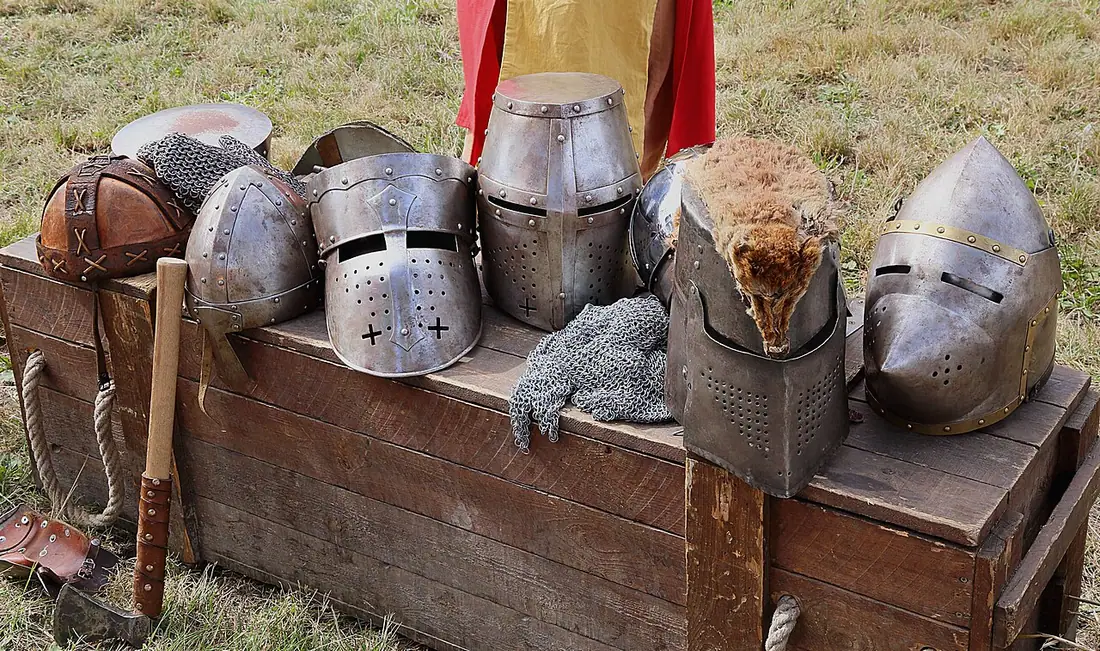
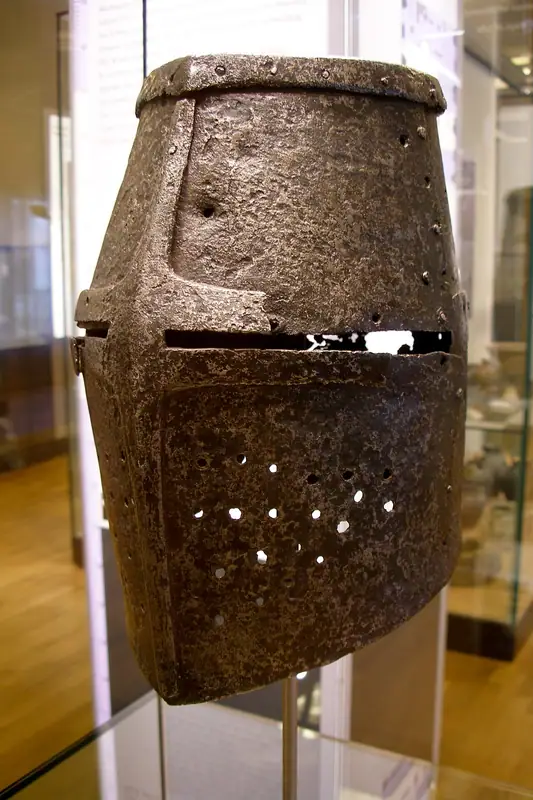
The shield was the answer. It was large, flat, carried high and turned toward the enemy. Paint a strong design on it and your men could pick you out at a distance.
Earlier shields were decorated too. The Bayeux Tapestry shows dragons, crosses and spots on Norman shields, but the same man does not carry the same design twice. That is the line between decoration and heraldry. Heraldry repeats, and it belongs to someone.
When did heraldry begin? The first arms we can date
The earliest widely accepted example is Geoffrey Plantagenet, Count of Anjou. Chroniclers record that Henry I of England gave him a shield of gold lions when he was knighted in the late 1120s. An enamel plaque made for his tomb at Le Mans shows him holding a blue shield with gold lions on it.
What makes the case strong is repetition. Geoffrey’s grandson, William Longespée, carried lions on blue as well. Once a design passes down a family, it is arms rather than ornament.
Across France, England, Germany and the Low Countries the same habit spread quickly through the second half of the century. The Wikipedia article on heraldry follows that spread in more detail.
Heralds and the birth of blazon
Heralds started out as messengers and announcers. They worked for kings and great lords, carried word between armies, and called out names at tournaments.
To do that job you had to know every shield on sight. Heralds became the experts, and experts need a vocabulary.
That vocabulary is blazon, a compressed way of describing a shield in words so it can be drawn the same way twice. It leans on Norman French, which is why the colours still carry names like gules, azure and sable. How to read a blazon walks through the word order.
Heralds also wrote things down. From the 1200s onward they compiled rolls of arms, long sequences of shields painted or blazoned one after another. Those rolls are our main record of who bore what.
Tournaments, seals and battlefield use
Three settings kept heraldry honest.
Tournaments put arms on display. Shields were shown, checked by heralds, and tied to a man’s reputation in front of a crowd.
Seals handled the paperwork. Wax seals authenticated charters and letters, and from the late 1100s more and more of them show the owner’s shield. Seals are why we can date so many arms, because they hang from documents that carry dates.
The battlefield was the original reason, and real fighting used surcoats, banners and horse trappers bearing the same design. The phrase “coat of arms” comes from that cloth coat worn over the armour.
From battlefield mark to family inheritance
Once a design identified one man reliably, his son wanted it. Inheritance turned arms into property, and property needs rules.
The eldest son took the arms, often with a small mark added while his father was alive. Younger sons made their own small changes so each branch could be told apart. That system of marks is cadency.
Marriage brought two coats onto one shield. Quartering and impalement grew out of that, and the display around the shield grew with it. The parts of a coat of arms sets out what each piece is.
This is also why no surname owns a coat of arms. Arms descend through documented people, not through spelling, which is the short answer to whether every last name has a coat of arms.
Why was heraldry important in the Middle Ages?
Heraldry mattered because it did three jobs at once. It identified people who could not be seen, it proved identity on documents, and it showed rank and family connections to anyone who could read a shield.
Disputes show how serious it became. In the 1380s the Scrope and Grosvenor families both claimed the arms “azure, a bend or” and argued it out in the English Court of Chivalry for years. Hundreds of witnesses gave evidence, including the poet Geoffrey Chaucer. Scrope won.
Medieval heraldry rules that still apply
- One person, one coat of arms. Arms identify an individual, and relatives bear differenced versions.
- Keep it readable. Metal goes on colour and colour on metal, the rule of tincture, because contrast is what made a shield work at a distance.
- Blazon outranks artwork. The words are the definition, and any drawing is one artist’s reading of them.
- Changes are marked, not hidden. Cadency and marshalling record who a person is and whom they married.
What survived into the modern day
Armour went out of use, but the heralds stayed. England and Wales kept the College of Arms, incorporated in 1484. Scotland kept the Court of the Lord Lyon, with a register of arms running from the seventeenth century. Ireland grants arms through the Chief Herald in Dublin. How the Irish and Scottish systems work compares the two offices.

Elsewhere, arms became custom rather than law. Countries, cities, universities, regiments and companies still use them, and most of those designs follow a grammar a thirteenth century herald would recognise on sight.
Design your own
The free Coat of Arms Creator on the home page builds a shield from the same pieces the medieval system used: a field, tinctures, charges, a crest and a motto. Pick the parts, read the result as a blazon, and download it.
Frequently asked questions
When did heraldry begin?
Heraldry began in the middle of the twelfth century in Western Europe. Knights in closed helmets could not be recognised, so they painted fixed designs on their shields and used them again and again. The earliest arms we can date belong to Geoffrey Plantagenet, Count of Anjou, who received a shield of gold lions on blue when he was knighted in the late 1120s.
Why was heraldry important in the Middle Ages?
Heraldry solved three problems at once. It told armoured men apart in battle and at tournaments, it identified the owner of a wax seal on a legal document, and it showed rank and family ties at a glance. Because arms were inherited, they also worked as evidence of descent, which mattered for land, titles and marriage claims.
What are the medieval rules of heraldry?
Medieval practice settled on a few rules that still hold. Arms belong to one person, not to a surname, and relatives bear a marked version called a difference. Metal is not placed on metal, and colour not on colour, so a shield stays readable at a distance. The written blazon, not any single drawing, is the real definition of the arms.
Who invented coats of arms?
No single person invented them. Coats of arms grew out of twelfth century battlefield habit, and heralds then turned that habit into a system. Heralds announced knights at tournaments, learned every shield on sight, compiled rolls of arms, and built the language of blazon so a design could be recorded in words. Kings later gave them formal offices and the power to grant arms.