
Lion Rampant Meaning: Every Animal Position in Heraldry
Lion rampant meaning plus every other heraldry animal position: passant, statant, sejant, couchant, salient and dormant, bird poses and which way it faces.
By the Coat of Arms Creator team
Lion rampant meaning comes down to the pose: rampant means rearing up on the hind legs, so a lion rampant is a lion reared up on its hind legs. Animal positions in heraldry are called attitudes, and rampant is one of them. Passant means walking. Statant is standing still, sejant is sitting, couchant is lying down with the head up, and dormant is asleep. Birds get their own set of poses: displayed, close, rising and volant. Here is the full list of heraldry poses, what each one looks like, and how to pick one that works.
The pose is part of the charge, not decoration
A lion rearing up and a lion walking are two different charges. “Azure, a lion rampant or” and “Azure, a lion passant or” are not the same shield, even though both show a gold lion on blue. Two families could bear each one and neither would be copying the other.
That is why the blazon, the written description of the arms, names the attitude every time. A blazon works like a set of drawing instructions. If it only said “a lion,” an artist would have no way to know whether to draw it rearing, pacing or asleep. Any animal charge takes an attitude. Where the blazon leaves it out, custom fills the gap: lions are drawn rampant, and most birds other than eagles are drawn close.
Rampant, passant, statant and sejant
These four cover most four legged beasts you will see in real arms.
| Attitude | What it looks like |
|---|---|
| Rampant | Rearing on the hind legs, forepaws raised, body in profile |
| Passant | Walking, one forepaw lifted, three feet on the ground |
| Statant | Standing still, all four feet on the ground |
| Sejant | Sitting on its haunches, forepaws down |
| Sejant erect | Sitting up with both forepaws raised |
| Courant | Running at full stretch |
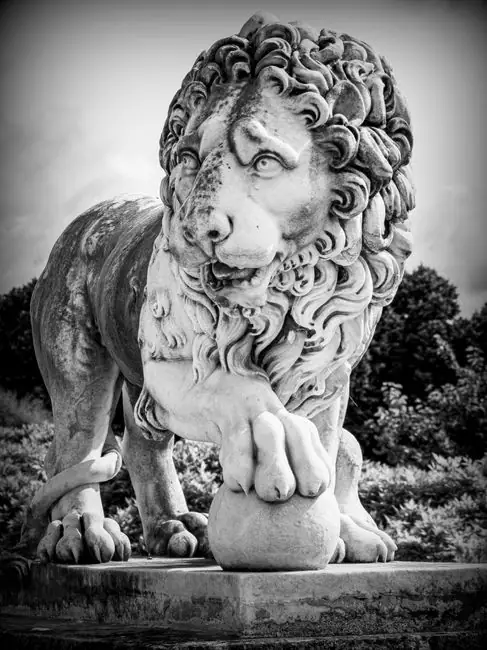
Rampant is the most common pose in heraldry and the one most people picture when they think of a heraldic lion. Passant comes next. The three lions of England are passant and looking out at the viewer. Older French blazon called a lion in that pose a leopard, which is why you sometimes find the English lions described that way in old books.
Couchant, salient and dormant
| Attitude | What it looks like |
|---|---|
| Couchant | Lying down, legs folded under, head raised and alert |
| Dormant | Lying down asleep, head on the forepaws, eyes shut |
| Salient | Leaping, both hind feet on the ground, both forepaws up together |
Salient sits between rampant and passant. Rampant is upright and still, like a pose struck for a portrait. Salient reads as movement, a jump caught halfway. These three are much rarer than the first group, so they are worth knowing if you want a design that does not look like everyone else’s.
Sea creatures have their own words. A fish swimming across the shield is naiant. One standing upright with its head up is hauriant. A dolphin is usually drawn embowed, curved as if it is mid leap.
Guardant, regardant and beasts in pairs
Guardant and regardant describe the head alone, so they attach to another attitude rather than replacing it. Guardant turns the head to face you straight on. Regardant turns it back over the shoulder. “A lion rampant guardant” is rearing up and staring out of the shield at the viewer.
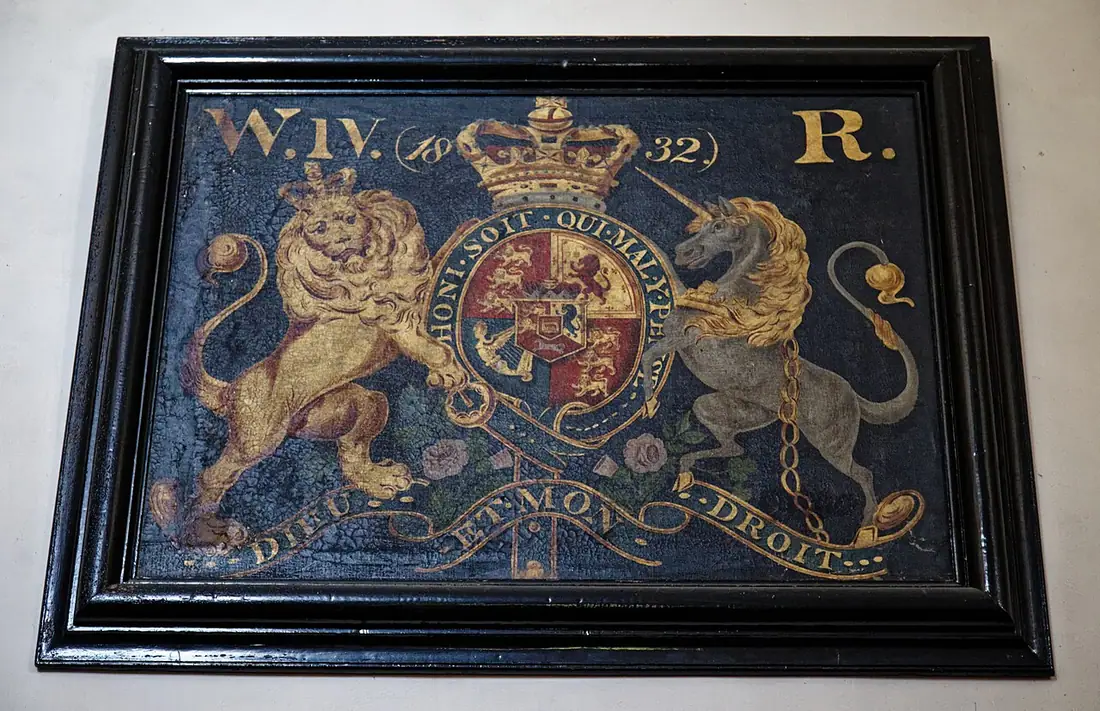
Two beasts can also relate to each other. Combatant means two of them rampant and facing each other, as if fighting. Addorsed means back to back. Supporters standing either side of a shield normally face inward.
Poses for birds: displayed, volant and rising
| Attitude | What it looks like |
|---|---|
| Displayed | Seen from the front, wings spread wide, legs apart |
| Close | Standing with the wings folded against the body |
| Rising | On the ground, wings raised, about to take off |
| Volant | In flight, body level, wings stretched out |
Eagles are usually displayed, and that is the default if nothing else is stated. Smaller birds are usually close. A blazon can go further and say whether the wingtips point up (elevated) or down (inverted). Some birds come with a fixed pose built into the name, such as the pelican in her piety, shown feeding her young from her own breast.
Heads, demi-beasts and body parts on their own
A part of an animal can be a charge by itself, and the cut edge gets named. Couped means cut clean with a straight line. Erased means torn off, drawn with a ragged edge. A stag or bull head shown face on with no neck behind it is caboshed.
A demi-beast is the top half of an animal, cut at the waist. Demi-lions are very common as crests, usually rampant, because only the upper body shows anyway. A beast’s leg on its own is a gamb. A pair of wings joined together is a vol, and a single wing is a demi-vol.
Which way the animal faces and why it matters
Animals face dexter unless the blazon says otherwise. Dexter is the shield bearer’s right, which lands on the viewer’s left, as the dexter and sinister entry explains. The usual explanation is that a charge should face the way the bearer is advancing.
An animal turned the other way is contourne, or facing sinister. This is normally done for balance, most often when two coats are joined on one shield and the beasts are turned to face each other. Facing sinister is not a mark of illegitimacy, whatever you may have read. That idea comes from mixing it up with the baton sinister, a completely different mark.
Picking a pose that reads clearly at small sizes
Think about the shape you are filling. A shield is taller than it is wide, so a single rampant beast fills it nicely. Passant and statant are wide and low, which is why they suit a horizontal band across the top or middle of a shield, and why shields with three beasts stacked above each other usually show them passant.
Check the silhouette. Shrink your design to the size of a stamp or a website icon and see if the pose still makes sense in outline. Rampant and displayed hold up well because their outlines are distinctive. Dormant and couchant can turn into a blob. Strong contrast helps too, so keep a light tincture against a dark one and skip fine details that will close up in print or embroidery. If you are still choosing which animal to use, the guide to coat of arms symbols lists the common charges and the meanings people attach to them.
Try the poses in the coat of arms maker
The fastest way to see the difference between rampant, passant and the rest is to swap them on a real design. The free coat of arms maker lets you place a beast on a shield, change its pose and colors, and download the result. Build a few versions side by side and pick the one that reads best small.
Frequently asked questions
What are animal positions in heraldry called?
They are called attitudes. An attitude is the pose an animal takes on the shield, and the written description of the arms always names it. The common ones for four legged beasts are rampant, passant, statant, sejant, couchant, salient, dormant and courant. Birds use a separate set of terms, including displayed, close, rising and volant.
What is the difference between rampant and passant?
Rampant means the animal is rearing up on its hind legs with its forepaws raised, shown in profile. Passant means it is walking, with one forepaw lifted and the other three feet on the ground. They are two different charges, so a gold lion rampant on blue and a gold lion passant on blue are not the same arms.
What does a lion rampant mean?
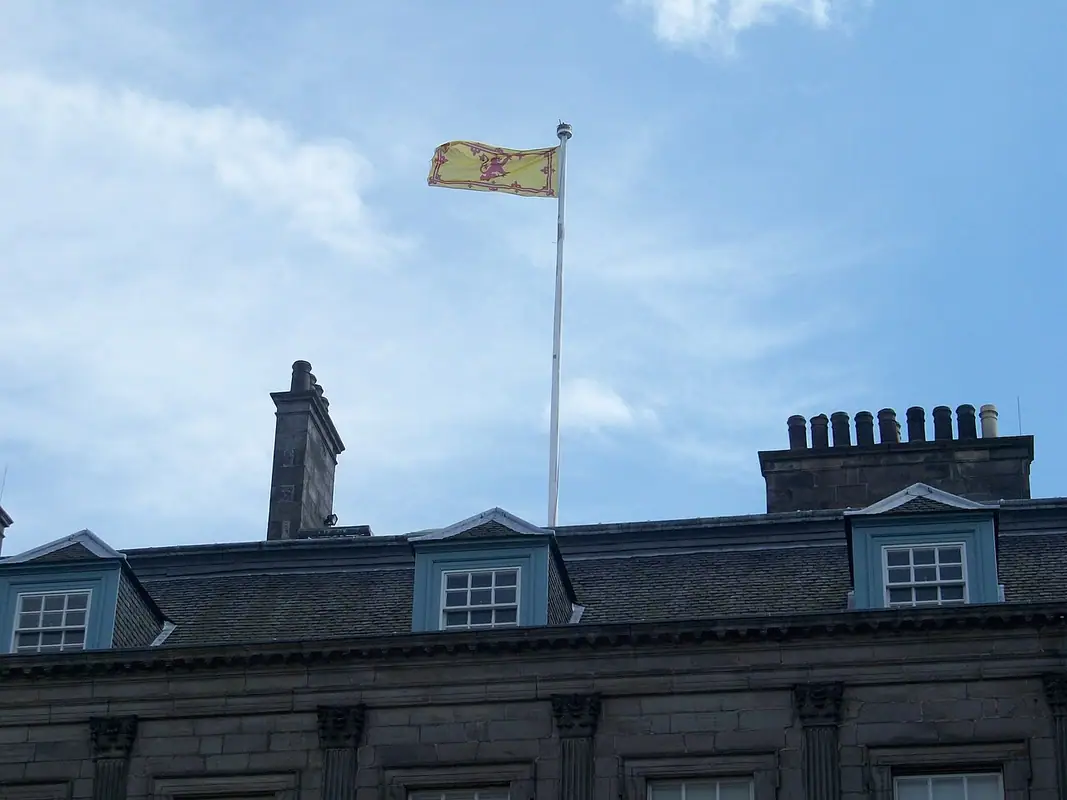
Rampant describes the pose, not a meaning. The lion is standing on its hind legs with its forepaws raised, as if about to strike. It is the most common pose in heraldry, and the red lion rampant on gold is the royal banner of Scotland. People often read strength or courage into it, but that is popular tradition rather than a heraldic rule.
Which way do heraldic animals face?
Unless the description says otherwise, an animal faces dexter, which is the viewer's left and the right side from the shield bearer's point of view. An animal turned the other way is described as facing sinister, or contourne. That reversal is usually done for balance when two shields are shown side by side.