
Family Crest Tattoo Ideas and What They Say
A family crest tattoo works best when the line work is simple. Learn how to cut a full achievement down to its bones, pick placement, and brief your artist.
By the Coat of Arms Creator team
A family crest tattoo is a tattoo of your family’s coat of arms, or of one piece of it, most often the shield or the crest figure that stands above the helm. It works well as ink because heraldry was built for bold shapes, flat color and contrast read at a distance, which is close to what a tattoo has to do on skin.
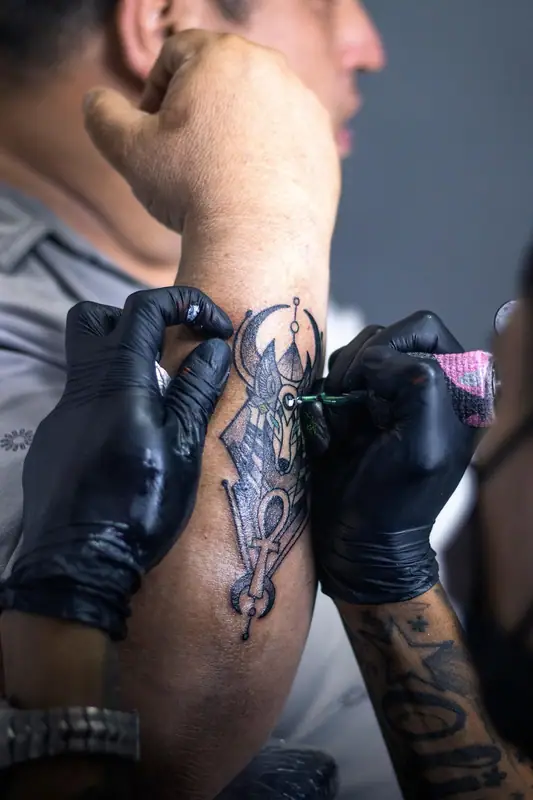
The hard part is not finding a design. It is deciding how much of the design to keep.
Why coats of arms suit tattoos
Medieval arms had to be recognized across a field, through dust, on a rider who would not hold still. That forced plain outlines, few colors and strong separation between them. Those same limits are what keep a tattoo readable years after it heals.
Heraldry also packs meaning into very little space. A lion on its hind legs, a chevron, a fleur de lis, a single star: each has a name and a history, and the meanings behind common coat of arms symbols are worth reading before you commit to one for life.
Placement and how size changes the design
Size decides the design, not the other way round. Pick the spot first, then cut the artwork to fit it.
| Placement | Room you get | What usually fits |
|---|---|---|
| Full back | Largest | Full achievement with mantling, supporters, compartment, motto |
| Chest or ribs | Large | Shield plus helm and crest, short motto scroll |
| Upper arm or shoulder | Medium | Shield alone, or crest alone |
| Outer forearm | Medium | Shield with one to three charges |
| Calf or thigh | Medium to large | Shield and crest, simple mantling |
| Wrist, ankle, inner bicep | Small | One charge, heavy lines, no lettering |
A family crest tattoo on the back
The back is the one placement with space for a full achievement, meaning shield, helm, torse, crest, mantling, supporters, compartment and motto. Mantling is the part that needs the most room, because it is drawn as cut and curling cloth and turns to mush when it is shrunk.
Big back pieces are usually broken into sessions. Artists price by the hour or by the day and rates vary a lot by artist and city, so ask for a quote and a session plan before you start rather than a flat guess.
Cutting a full achievement down to its bones
Most arms have more going on than skin can hold. Detail tends to fail in this order, so drop from the top of the list down:
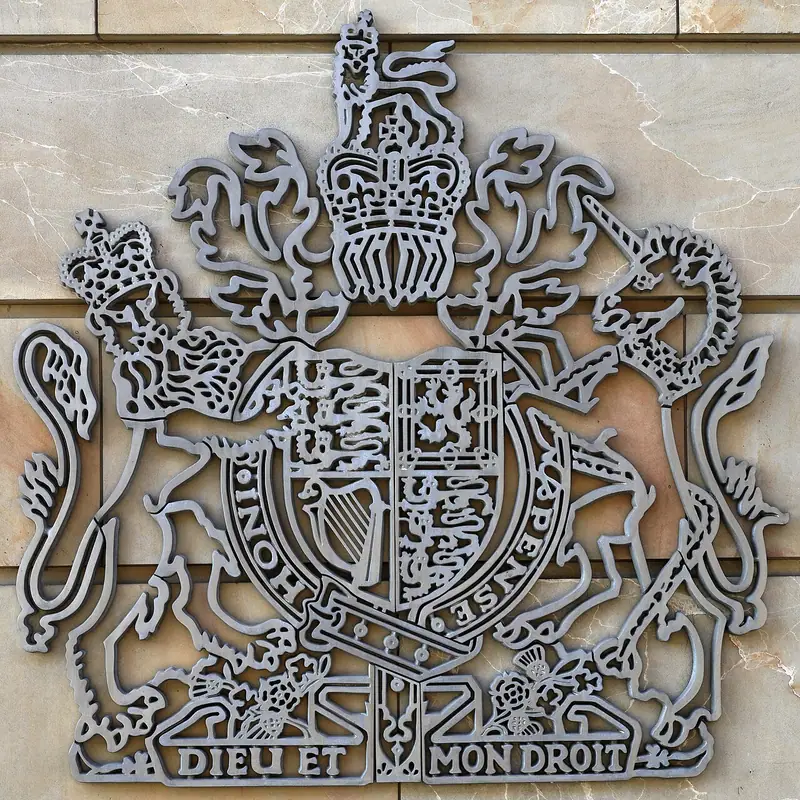
- Motto lettering on a scroll
- Mantling and other flowing cloth
- Supporters and the compartment they stand on
- Quarterings, where one shield is split into several separate coats
- Shading, hatching and stippling
- Small features inside a charge, such as claws, teeth or single feathers
The cheapest test there is: print the design at the exact width it will sit on your body, tape it to a wall, and look at it from across the room. Anything you cannot make out on paper will not appear by magic in skin.
Engravers solve the same puzzle at an even smaller scale, and the thinking carries over from family crest signet rings and jewelry to tattoos almost unchanged.
Color, black and grey, and how ink ages
Heraldic colors are called tinctures, and they are part of the meaning rather than decoration. The heraldry colors guide covers what gules, azure, sable, vert and purpure stand for, along with the two metals.
Those metals cause the only real translation problem. Gold reads fine as yellow. Silver does not, because white ink fades unevenly on most skin, so artists usually leave silver areas as bare skin instead of packing them with white.
Black and grey is the safer choice for longevity. Lines spread slightly as skin ages, which closes small gaps, so leave more space between lines than looks necessary and keep strokes heavier than you would for print.
If you want a single color piece that still shows tincture, you can borrow the old print trick: engravers used set line and dot patterns to stand for each color, a system Wikipedia documents under hatching in heraldry). It suits blackwork, though the finest patterns need space to stay legible.
Family crest tattoos in a traditional style
American traditional is a natural fit. Thick black outlines, a short palette and bold shapes are exactly the rules heraldry already follows, and traditional pieces hold up better over decades than fine line work does.
Etching or woodcut styles suit arms too, since they copy the engraved prints that most historical coats of arms survive in. Fine line is the risky end. It looks sharp fresh and loses the small detail first.
Borrowing arms versus designing your own
A surname does not come with a coat of arms. Arms were granted to one person and inherited by their descendants, often with small changes marking each son, so thousands of people sharing a last name do not share a shield. Wikipedia’s article on the crest) explains why even the word is narrower than most people use it.
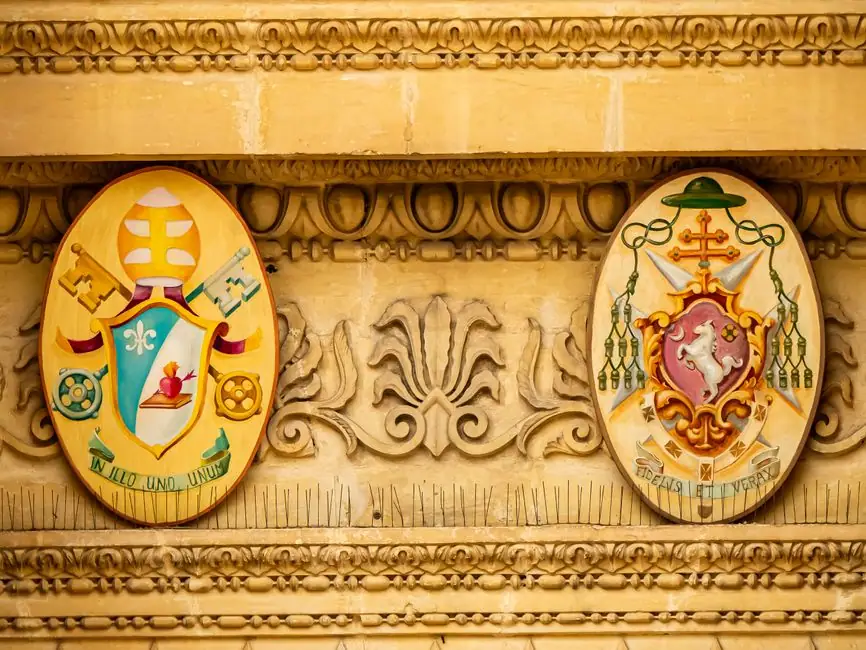
There is also a legal side, which the are family crests copyrighted answer covers. Old designs are generally free of copyright, but a modern drawing of them belongs to whoever drew it, and that matters if an artist is copying someone’s artwork line for line.
Designing your own arms is the cleaner route for most people. You choose charges that mean something real about your family, and you get a design nobody has to apologize for.
Briefing your tattoo artist
Bring more than a phone screenshot. Give your artist:
- Vector line art, sized to the stencil, so the edges stay crisp at any scale. The best file format for printing a coat of arms answer covers what to export.
- A printed proof at the finished width.
- A note on which elements must survive and which they can simplify.
- Color names, not just swatches, so nothing gets guessed.
- A request to see the stencil on your skin, in a mirror, before any needle work.
Good artists will redraw your file into something that works on a curved surface. Tell them what is sacred and let them handle the rest.
Finalize your design first
Lock the artwork before you book the chair. Once the design is settled you own a file you can reuse anywhere, from family crest wedding invitations to a signet ring or a letterhead, all matching.
You can build and refine that design in the Coat of Arms Creator on the home page. Pick a shield shape, set the field and tinctures, add charges and a crest, then export a clean file to hand your artist.
Frequently asked questions
What is a family crest tattoo?
A family crest tattoo is a tattoo of a coat of arms, or of one part of it. Most are either the shield with its charges, or the crest, which is the figure that sits above the helm. Some people ink the full display with helm, mantling, supporters and motto, but that needs a large area of skin.
Where is the best place for a family crest tattoo?
The back and the chest are the only spots with room for a full achievement, including mantling, supporters and a motto scroll. The outer forearm and the shoulder suit a shield or a crest on its own. Small spots like the wrist or the inner bicep work for one charge with heavy lines and nothing else.
Can I get a tattoo of my surname's coat of arms?
Nothing stops you, but know what you are wearing. Arms were granted to a person and passed to their descendants, so a surname alone does not entitle you to a specific shield. Many people treat an inherited design as a tribute, and many others design their own arms instead, using symbols that fit their actual family.
Should a family crest tattoo be color or black and grey?
Color shows the tinctures, which is half of what the arms mean, so it suits anything with gules, azure or vert. Black and grey holds its edges better over time and reads at smaller sizes. White ink is unreliable on most skin, so silver is usually left as bare skin rather than filled.