
What Should I Put on My Coat of Arms? Ideas and Examples
What should I put on my coat of arms? Pick one to three charges from your trade, place or family traits, colors that read small, and a motto that fits.
By the Coat of Arms Creator team
What should you put on your coat of arms? One idea about yourself or your family, one to three symbols that carry it, two or three colors, and a short motto. That is the whole list. Drawing it is the easy part. Choosing content that still means something in ten years takes some thought, and that is what this guide is for. If you want the order of operations first, the full walkthrough for making a coat of arms covers shield shapes, divisions and downloads.
Settle one thing first. A design you make yourself is fine for a reunion shirt, a wedding invitation, a signet ring or a tattoo. It is not a grant from a heraldic authority, and for most people it does not need to be, since anyone can design their own arms.
Start from what you want the arms to say
Before you open any symbol list, write one sentence about the people the arms stand for. “We build things and we stay put.” “We came from the coast and we work with our hands.” “I read everything and finish nothing.” That sentence is your brief. Anything on the shield either serves it or comes off.
Most coat of arms ideas come from one of four places:
- Work. What you, your parents or your grandparents did for a living.
- Place. A country, county, river, mountain or city your family is tied to.
- Trait. What your people are actually like. Stubborn, generous, restless.
- Name. A pun on the surname, which medieval heralds used constantly. Bows for Bowes, bees for Beeton, a boar for Baird.
Prompts that shake ideas loose
- What did your family do before they did what they do now?
- What object would you find in every house in your family?
- What animal would a cousin pick for you, and why?
- What word do you want on the scroll underneath?
Two or three answers is plenty.
Pick two or three ideas, not ten
The common beginner move is cramming in everything that matters at once: the trade, the hometown, the dog, the hobby, the wedding year. Arms were built to be known at a distance, on a shield carried by a moving rider. Eight small symbols on one shield read as mush.
A safe structure is one main charge in the middle, or three copies of the same charge, plus one bold band if you need a second idea. A band across the top or a diagonal stripe can stand for a place or a branch of the family without adding clutter.
Turn a trade, place or trait into a charge
A charge is anything placed on the shield. These are starting points, not rules:
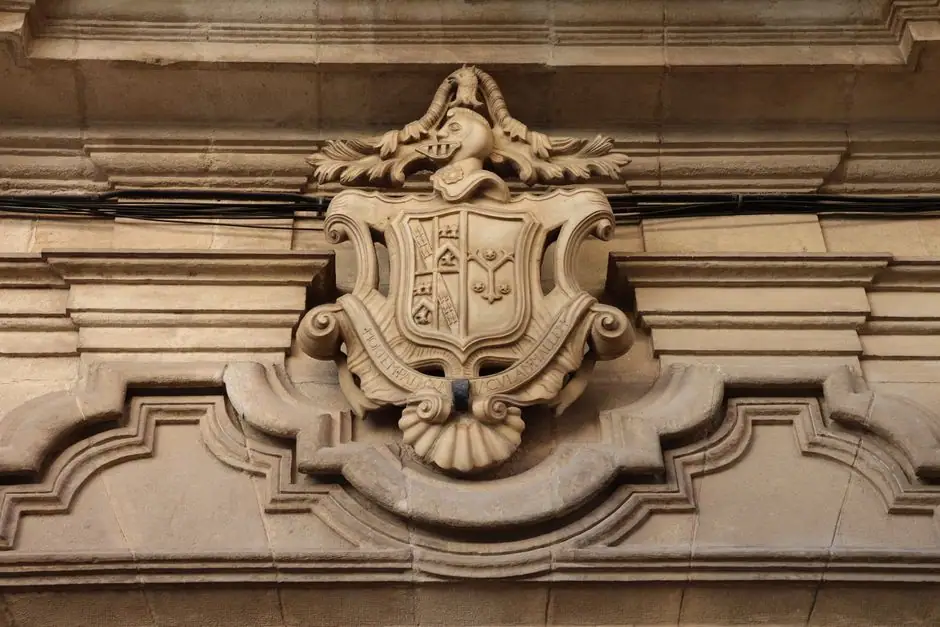
| What you want to say | Charges to try |
|---|---|
| Building, carpentry | Hammer, saw, carpenter’s square |
| Farming | Wheat sheaf, plough, bull |
| Sea, coast, travel | Anchor, ship, scallop shell |
| Study, teaching | Open book, candle, owl |
| Medicine, care | Hand, heart, serpent on a staff |
| Service, defense | Sword, tower, portcullis |
| Courage | Lion on its hind legs |
| Faith | Cross, fleur de lis, star |
| Land, growth | Oak tree, acorn, three leaves |
Traditional meanings are loose and many were attached long after the fact, so do not agonize over them. Coat of arms symbols and their meanings lists the common charges with the meanings people usually give them. If two symbols say the same thing, keep the simpler one.
Posture matters with animals. A lion up on its hind legs looks fierce, a walking lion looks watchful, a seated one looks settled. Pick the one that matches your sentence.
Choose colors that still read at thumbnail size
Heraldic colors are called tinctures: two metals, gold and silver (silver is drawn white), and five main colors, red, blue, green, black and purple. Use two or three in total. Four starts to look like a flag contest entry.
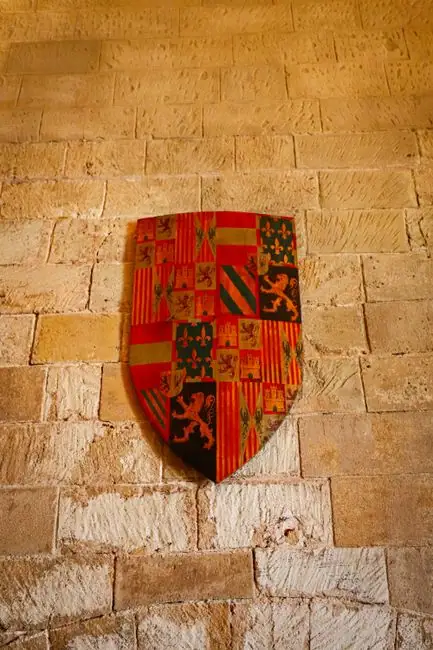
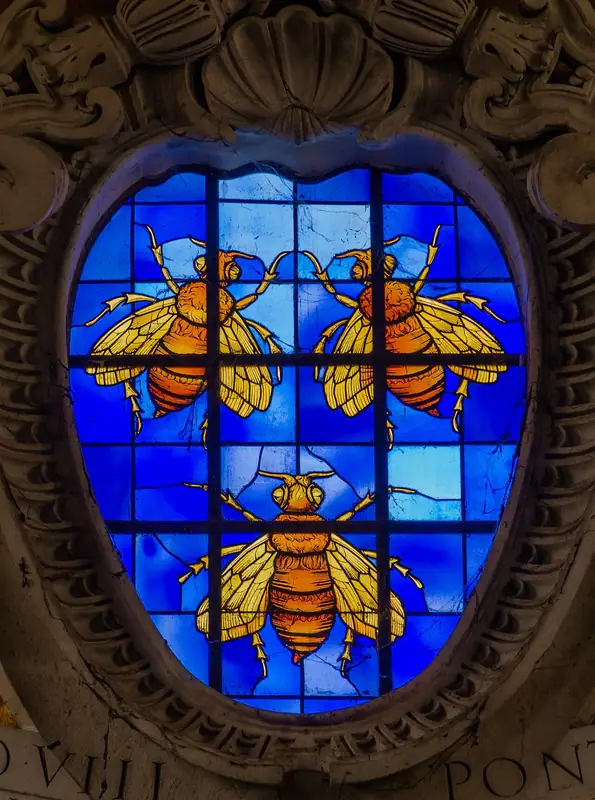
The one rule worth keeping is the rule of tincture: no color on a color, no metal on a metal. Gold on blue reads from across a room. Red on blue turns into a smudge. The rule of tincture covers the exceptions.
Then test it small. Shrink the design to the size of a ring face. If you cannot tell what the charge is, enlarge the charge and drop a detail.
Add a motto that sounds like you
Keep it to two to five words. Latin is traditional and looks the part, and Latin mottos for a coat of arms has lists with translations. English works too, and a blunt phrase in your own voice often ages better than Latin you cannot pronounce. Do not try to translate a whole sentence. If it needs a comma, it is too long.
Common beginner mistakes
- Eight charges on one shield.
- Gradients, drop shadows and photo textures. Heraldry is flat color.
- Hairline outlines and fine detail that disappear in print.
- Color on color, which kills the contrast.
- A surname spelled across the shield. Words belong on the scroll.
- Treating a surname crest sold online as your family’s, since last names do not come with their own arms.
What makes a good coat of arms
Five checks before you call it done:
- You can describe it in one sentence.
- It is recognizable at thumbnail size.
- Every element points back to your one sentence.
- Metal sits on color, color sits on metal.
- You would still put it on a gift in ten years.
Build it in the coat of arms maker
Sketch on paper if that helps, then build the real thing in the coat of arms maker on the home page. Choose a shield, set the field, drop in your one to three charges, add a helm, crest and motto scroll, then download it. It is free, with no account and no watermark, so trying three versions of your idea costs you nothing but an evening.
Frequently asked questions
What should I put on my coat of arms?
One idea about yourself or your family, carried by one to three symbols, in two or three colors, with a short motto. Most people draw from four wells: their work, a place their family is tied to, a trait that runs in the family, or a pun on the surname. Pick the two strongest and leave the rest off.
What makes a good coat of arms?
It reads at a glance. You can describe it in one sentence, every element points back to one idea, the colors follow the rule of tincture so a metal sits on a color, and the whole thing is still recognizable shrunk to the size of a ring face. Flat color, bold shapes, no gradients or fine detail.
Can I put my last name or initials on the shield?
You can, but traditional heraldry keeps words off the shield. Letters are hard to read at a distance and they date a design. Put your words on the motto scroll instead, where text belongs, and let a charge carry the family name. A pun on the surname is the old trick: bows for Bowes, bees for Beeton.
Where do I get coat of arms design ideas?
Start with questions, not galleries. What did your family do before they did what they do now? What object sits in every one of their houses? What animal would a cousin pick for you? Two or three honest answers give you better arms than scrolling symbol lists, because the symbols only have to carry the answers.