
Coat of Arms Griffin, Dragon and Unicorn: What Each Beast Means
What a coat of arms griffin means, plus dragons, wyverns and unicorns: the popular symbolism, the real heraldic differences, and how to pick one for your shield.
By the Coat of Arms Creator team
A coat of arms griffin means valor and watchfulness, and the beast is drawn as half eagle and half lion: eagle head, wings and forelegs joined to a lion’s body and hind legs. A dragon stands for fierce defense, a wyvern is a two-legged dragon, and a unicorn stands for purity and untamed strength.
None of those meanings are official. They come from heraldry handbooks printed long after the first arms were granted, the same tradition behind the lists in coat of arms symbols and their meanings. They are still a fair guide to how people read a design today.
Mythical heraldic beasts at a glance
| Beast | What it looks like | Commonly attributed meaning |
|---|---|---|
| Griffin | Eagle head, wings and forelegs; lion body and hind legs | Valor, watchfulness |
| Male griffin | A griffin with no wings, spikes instead | Fierceness |
| Dragon | Four legs, bat wings, barbed tongue and tail | Fierce defense, protection |
| Wyvern | Two legs, wings, coiled serpent tail | Strength, warding off harm |
| Unicorn | Horse with spiral horn, goat beard, cloven hooves, lion tail | Purity, untamed strength |
| Cockatrice | Cock’s head and legs, dragon wings and tail | Deadly to look at |
Why imaginary beasts earned a place on arms
Arms had one job at the start: tell two armored men apart at a distance. Real animals ran out fast. Lions, eagles, boars and stags were used over and over, so heralds needed fresh shapes.
Hybrids solved that. A griffin reads as a lion from the waist back and an eagle from the shoulders forward, and that outline is unmistakable on a banner.
Medieval readers also met these creatures in bestiaries, which treated them as real animals from far-off places. A griffin was no odder than an elephant to someone who had seen neither. And a monster says something a deer cannot.
Beasts built from the lion
Many heraldic monsters are a lion with parts swapped out. Once you see that, the whole family is easy to sort.
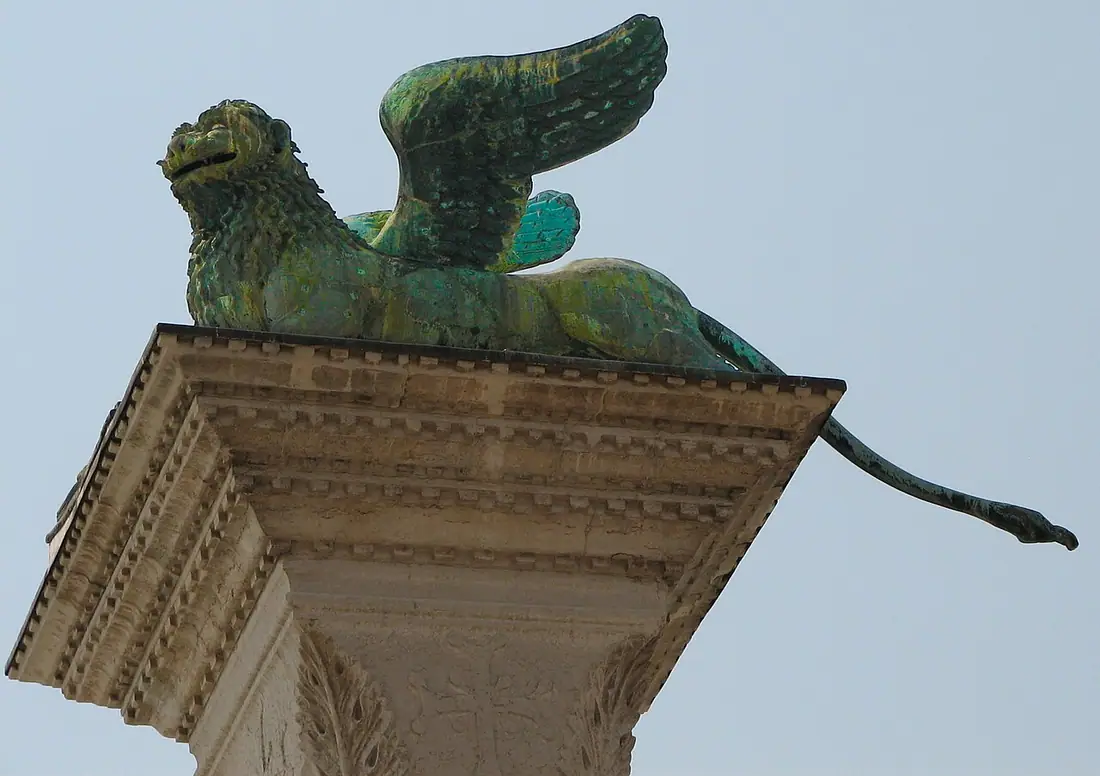
- Griffin: eagle front half, lion back half.
- Winged lion: a plain lion with wings, best known as the lion of Saint Mark in Venice.
- Sea-lion: lion front, fish tail, usually shown swimming.
- Man-tiger, or manticore: lion body with a human head.
- Lion-dragon: lion front, dragon back.
Position matters as much as the beast. A lion standing on its hind legs is rampant, and one walking is passant. A griffin in the rampant pose gets its own word, segreant. The positions heraldic animals take guide covers the full set.
What does a coat of arms griffin mean?
A griffin stands for valor and watchfulness. The lion half brings courage, the eagle half brings keen sight, and the guardian legend adds the sense of something that never lets its post go.
The standard griffin has an eagle’s head with upright ears, eagle wings and forelegs with talons, and a lion’s hindquarters and tail. The Wikipedia article on the griffin traces the figure to ancient Near Eastern and Greek art, centuries before heraldry existed.
If you want a family crest with a griffin, remember the crest is the figure above the helm. A demi-griffin, meaning the top half only, is the usual choice there, because the full beast gets lost at small sizes.
Color is yours to pick. Griffins are often shown in gold (Or) or silver (Argent) on a dark field, which keeps the shape readable, and a red (Gules) griffin on gold is just as traditional.
The male griffin
English heraldry has a second version called the male griffin, or keythong. It has no wings at all. Spikes and rays stick out from its body instead. It is rare, and worth knowing mainly so you do not mistake it for a badly drawn griffin.
Dragon versus wyvern in heraldry
In modern English heraldry the difference comes down to the leg count.
| Feature | Dragon | Wyvern |
|---|---|---|
| Legs | Four | Two |
| Wings | Bat wings | Bat wings |
| Tail | Barbed, often knotted | Coiled serpent tail |
| Tongue | Barbed | Barbed |
Medieval artists were not strict about this. Both forms appeared, and blazons called both a dragon. The tidy split came later through printed heraldry books, and the Wikipedia article on the wyvern sets out how the names settled.
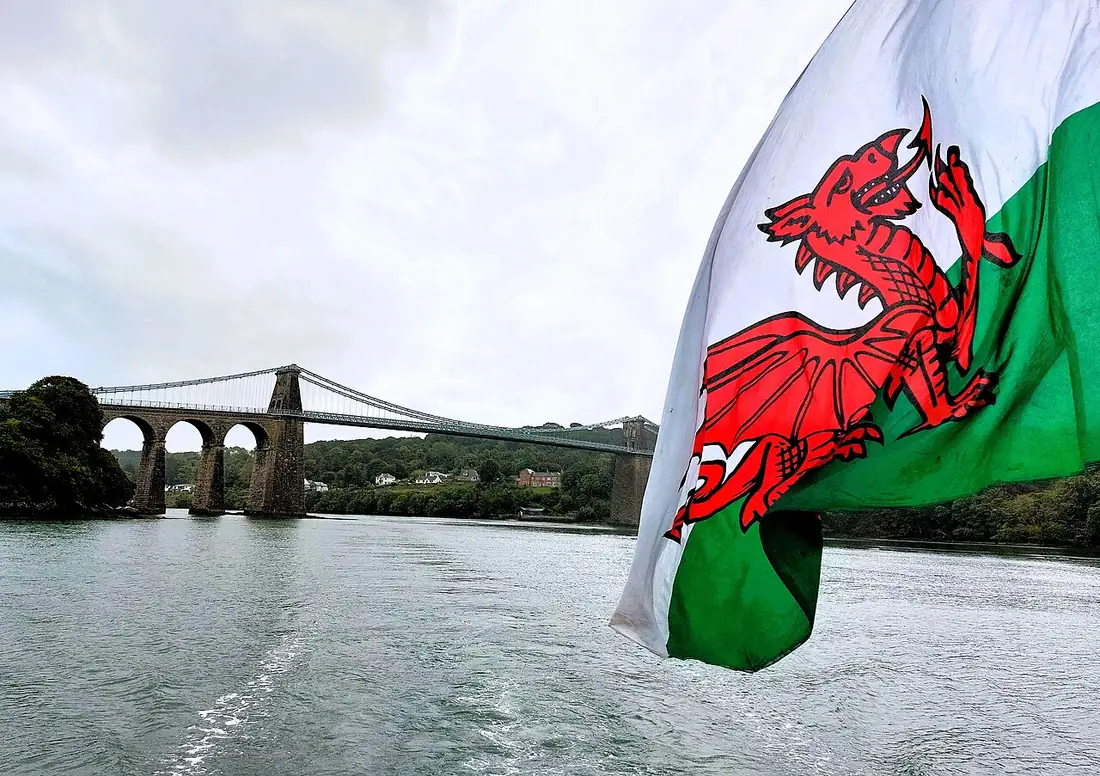
The best known heraldic dragon is the red dragon of Wales, shown passant on a green and white field. Dragons also serve as crests and as supporters in many British arms. Choose between the two on looks: a wyvern fits a narrow space, a dragon fills a shield.
What does a unicorn mean in heraldry?
A unicorn means purity and strength that force cannot tame. The old story said only a maiden could calm one, so a unicorn shown collared and chained reads as power held in check rather than power broken.
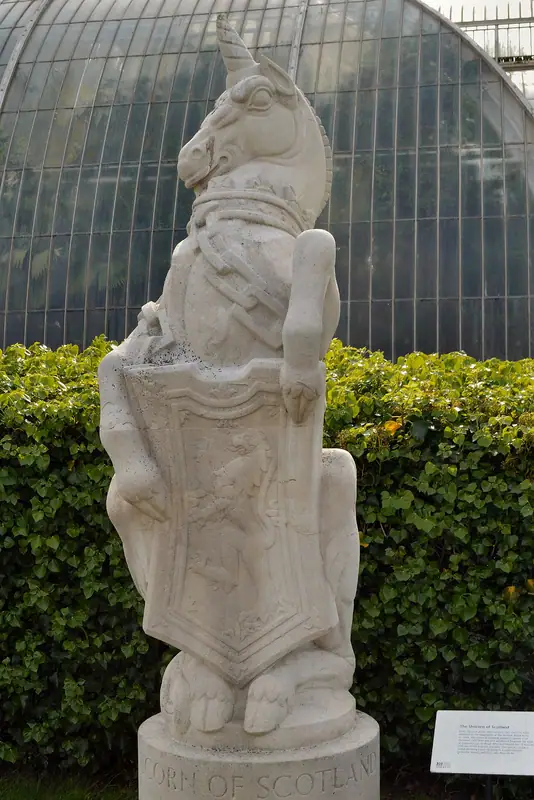
A heraldic unicorn is not a horse with a horn stuck on. It has a horse’s body, a lion’s tail, cloven goat hooves, a goat’s beard and a long spiral horn.
Scotland is why most people know the beast. The unicorn is Scotland’s national animal, two unicorns support the royal arms of Scotland, and in the royal coat of arms of the United Kingdom a chained unicorn stands opposite the English lion.
Other heraldic hybrids worth knowing
- Cockatrice: a cock’s head, comb and legs with dragon wings and tail, said to kill with a look.
- Pegasus: a winged horse, read as fame and swift news.
- Yale: a tusked beast with two horns that can swivel forward or back.
- Enfield: fox head, eagle talons, wolf body and lion hindquarters, found in Irish crests.
- Heraldic antelope: a tusked beast with serrated horns and little in common with a real antelope.
- Salamander: drawn in flames, used by Francis I of France.
- Phoenix: a half eagle rising from a fire, for rebirth.
Choosing a creature that fits your design
- Start with the meaning, then check the shape. A griffin and a dragon both say defense, but one looks watchful and one looks aggressive.
- Measure the space. A rampant griffin or a leaping unicorn fills a tall shield. A walking dragon suits a wide one.
- Keep contrast high. The rule of tincture says metal does not sit on metal and color does not sit on color, and a hybrid with lots of small detail needs that contrast to stay legible.
- Use one beast. Two monsters on one shield fight each other for attention.
- Let the motto agree with it. A griffin and a motto about watching make a single statement instead of two.
Build your beast in the free coat of arms maker
The free coat of arms maker on the home page keeps mythical beasts with the other animal charges, so you can set a griffin, dragon, wyvern or unicorn on a shield, change its color, and add a crest and a motto scroll. Nothing to install, no account.
Frequently asked questions
What does a griffin mean on a coat of arms?
A griffin usually stands for valor and watchfulness. It joins the courage of the lion to the sharp sight of the eagle, and old stories cast it as a guardian that sits on treasure and will not be moved. No heraldic authority gives charges official meanings, so treat this as popular symbolism from later handbooks rather than a rule heralds followed.
What is the difference between a dragon and a wyvern in heraldry?
In modern English heraldry a dragon has four legs, bat wings, a barbed tongue and a barbed tail. A wyvern has only two legs, and its body ends in a coiled serpent tail. Medieval artists drew both forms and blazons called both a dragon, so the neat split between the two names is a later convention from printed heraldry books.
What does a unicorn mean in heraldry?
A unicorn means purity and strength that force cannot tame, which is why a chained unicorn reads as power held in check. The heraldic version has a horse's body, a goat's beard and cloven hooves, a lion's tail and a spiral horn. It is Scotland's national animal and supports the royal arms of Scotland.
Can I put a griffin on my own family crest?
Yes. Anyone can design arms with a griffin, dragon, wyvern or unicorn for personal use, on a print, a signet ring or an invitation. That is different from a granted coat of arms, which only a heraldic authority can issue in countries that have one. A design you make yourself is yours to use, not an official grant.