
Family Crest Signet Rings and Jewelry
How family crest signet rings get made: hand engraved, cast or laser, how much of your coat of arms survives at ring size, which finger to wear it on.
By the Coat of Arms Creator team
A family crest signet ring is a flat faced ring with a coat of arms cut into the metal. Sellers call the same object a coat of arms signet ring, a family crest ring for men, a family crest ring for women, or a family crest pinky ring. The design work behind all of them is identical. What changes is the size of the face, the finger it sits on, and how much of your arms a ring maker can actually fit. This guide covers how rings get engraved, how much detail survives at that size, how to simplify your arms for metal, and what artwork an engraver needs from you.
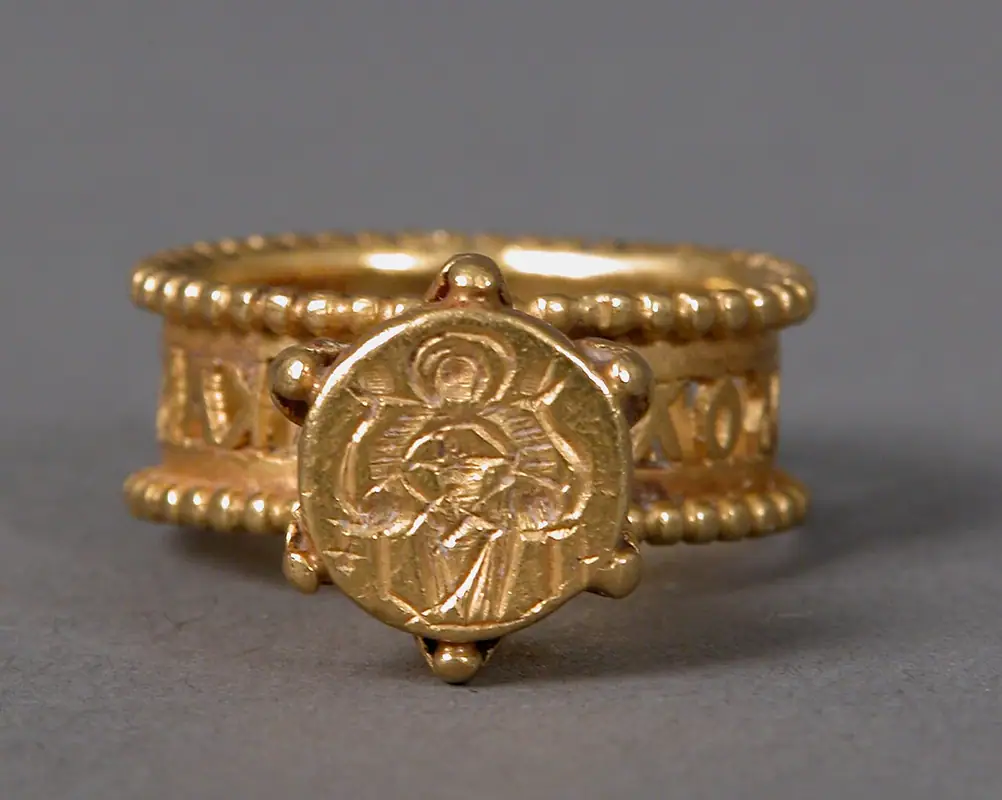
What to put on a signet ring instead of a crest
If you don’t have a crest, put your initials on the ring. A monogram of two or three letters is the most common choice, and it suits the small face better than most coats of arms. A single symbol, a short motto or a simple badge you design yourself all work too.
Don’t borrow a crest sold for your surname. Arms belong to one person and their heirs, so a ring with someone else’s crest isn’t yours to wear, as can you buy a coat of arms explains. These alternatives are yours outright:
- Initials or a monogram. Interlaced letters look the most traditional. Plain block capitals cut cleanly and read best as a wax seal.
- One symbol. A single animal, tree, star or fleur-de-lis that means something to you, drawn as a bold outline.
- A short motto. Two or three words fit across the face or around a border. Longer mottos get too small to read.
- A date or a place. A wedding year, a house name or the coordinates of somewhere that matters, set in simple lettering.
- Your own badge. Design a small emblem from one charge and one or two tinctures in the coat of arms maker, then print it at the face size before you order.
- Nothing at all. A plain polished face, or a stone set into it, can be engraved later.
The detail limits below apply to all of these. A letter or symbol that needs a magnifying glass on paper will be lost in metal.
What a signet ring is for
The signet ring began as a seal. The design was cut into the face in reverse, so pressing it into warm wax left an impression that read the right way round. A design cut down into metal like that is called intaglio.
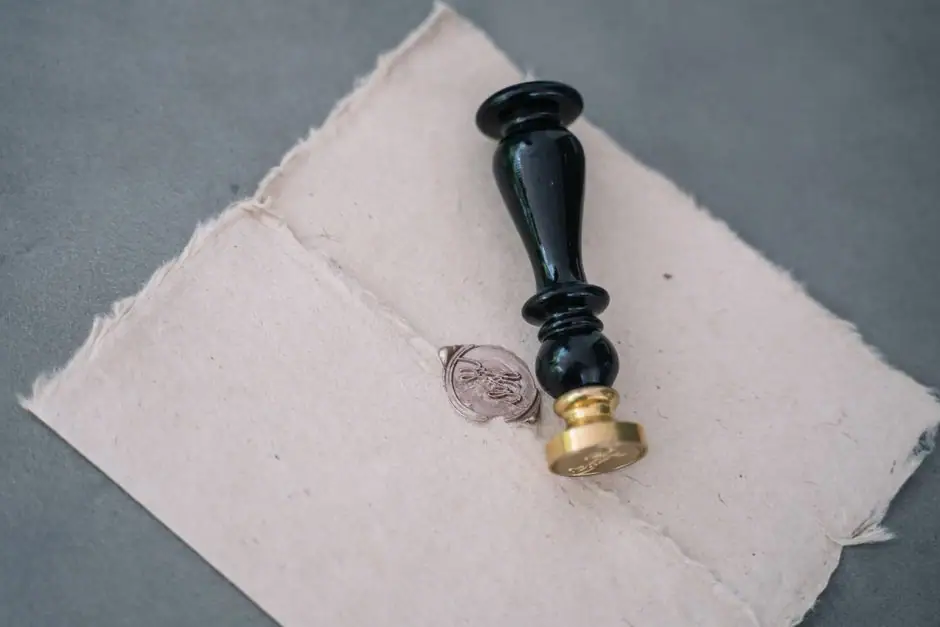
Most rings sold today never touch wax. They are worn as jewelry, and the arms are often raised above the face instead, in relief. Decide which you want before you talk to a maker, because it changes the engraving.
A working seal needs a true intaglio cut, a flat or barely domed face, and enough open space in the design that the wax releases cleanly. A ring meant only to be looked at can be intaglio, relief, or a mix, and can carry finer surface detail that would clog with wax.
Hand engraved, cast or laser
| Method | How it works | Best for |
|---|---|---|
| Hand engraving | A seal engraver cuts the metal with hand gravers | Crisp intaglio, clean wax seals, one off work |
| Casting | The design is carved in wax or modelled in 3D, then cast in metal | Raised designs, depth of shape, repeat orders |
| Machine or laser | A CNC cutter or laser works a finished blank | Lower cost, faster turnaround, line art and lettering |
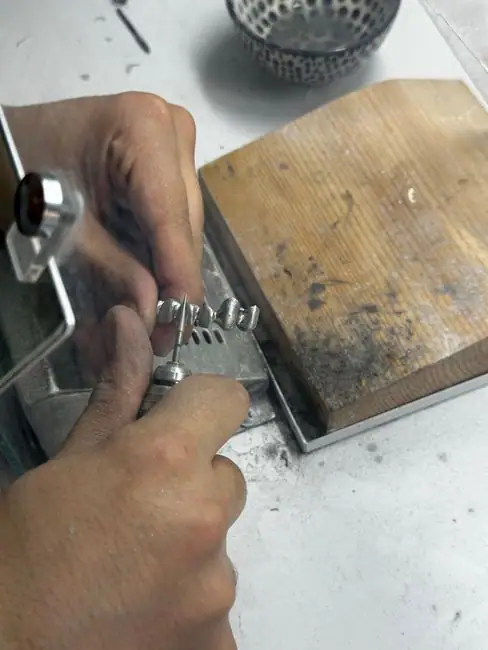
Hand engraving is the slowest and the most expensive, and it buys you judgement as well as skill. A good engraver will look at your drawing and tell you what to drop. Casting gives shape and depth that flat engraving cannot, which suits a crest standing proud of the face. Laser marking is cheap and quick, but it cuts shallow, so it reads well as a decorative line drawing and poorly as a seal.
How much detail survives at ring size
Signet faces are small. Oval faces commonly run somewhere around 10 to 16 mm across the long axis, with pinky rings at the lower end and heavier men’s rings above it. Sizes vary by maker, so ask for the face dimensions in millimetres before you finish any artwork.
Then run the cheapest test there is. Print your design at that exact width and look at it on the desk at arm’s length. Anything you cannot make out on paper will not appear by magic in gold.
Detail usually fails in this order:
- Motto lettering on a scroll
- Mantling and other flowing cloth
- Supporters and the compartment they stand on
- Hatching, stippling and fine shading
- Quarterings, where one shield is split into several coats
- Small features inside a charge, such as claws, teeth or single feathers
Simplifying your arms for metal
There are three sensible ways to cut a full design down.
Shield only. Keep the field and one to three main charges and throw everything else away. This is the most legible choice at small sizes.
Crest only. The crest is the figure that sits on top of the helm, and on its own it makes a strong, simple ring. It is also the usual reason people say family crest when they mean the whole achievement, which the family crest and coat of arms guide pulls apart.
Shield and crest together, on a taller face. This works if both parts are simple and the face has room to breathe.
Colour is the other problem. Plain engraved metal cannot show tincture. You have three options: accept the design in bare metal, use the old hatching conventions where lines and dots stand in for colours, or add enamel. Hatching is traditional but turns muddy at ring size. Enamel fills the recessed areas with real colour and looks striking, though it chips and wears over years of daily use. Also keep your lines heavier than you would for print. Thin strokes close up or vanish when a cutter rounds them off.
Which hand and finger
British custom puts the signet ring on the little finger of the left hand, which is where the term pinky ring comes from. In much of continental Europe people wear it on the ring finger, on either hand. There is no rule you can break here.
The practical points matter more. Little fingers measure smaller, so a pinky ring carries a smaller face and less detail. The non dominant hand takes fewer knocks, which keeps a cut design sharp for longer. Wide shanks feel tighter than narrow ones at the same size, so get measured in the style you plan to buy.
What artwork an engraver needs from you
Send vector line art, not a screenshot. Vectors hold their edges at any size, and a cutter can follow the paths directly. The file format for printing a coat of arms answer covers which formats to export and why.
Along with the file, include a proof printed at the quoted face size, a note on which elements must survive the cut, and a note on which should be dropped first if space runs short. You do not need to mirror anything yourself. The engraver reverses the design for an intaglio cut.
One more thing worth settling before money changes hands: who owns the drawing. If you designed the arms yourself, the artwork is yours to hand over. If you took it from a book or a surname website, it may not be. The are family crests copyrighted answer explains the split between a heraldic design and a particular drawing of it.
Rough costs and lead times
Four things drive the price. The metal and its weight, since gold is priced by weight and that price moves with the market. The method, since hand engraving is billed in hours. Whether the ring is a stock blank or made for you. And the face size, because a larger face means more metal and more cutting.
At the low end sits a sterling silver blank with machine engraving. At the top sits a custom 18k gold ring cut by hand, which can cost many times as much. Ask for a written quote that names the metal, the karat, the face dimensions, the engraving method and the proof stage, and never approve cutting without seeing that proof.
Lead times run in weeks rather than days for anything custom. Hand engravers work through a queue, enamel adds firing time, and sizing after engraving adds another step. If the ring is a gift, start a couple of months out.
Other family crest jewelry
The same simplified artwork carries over to cufflinks, pendants, tie bars and bracelet charms, all of which face the same size limits as a ring. A brass wax seal stamp is the cheapest way to test a design in the real world before you commit to metal, since the engraving is larger and the stamp costs a fraction of a ring. If you are planning a set, the family crest on wedding invitations answer covers using one design across paper and metal.
Draw it before you buy it
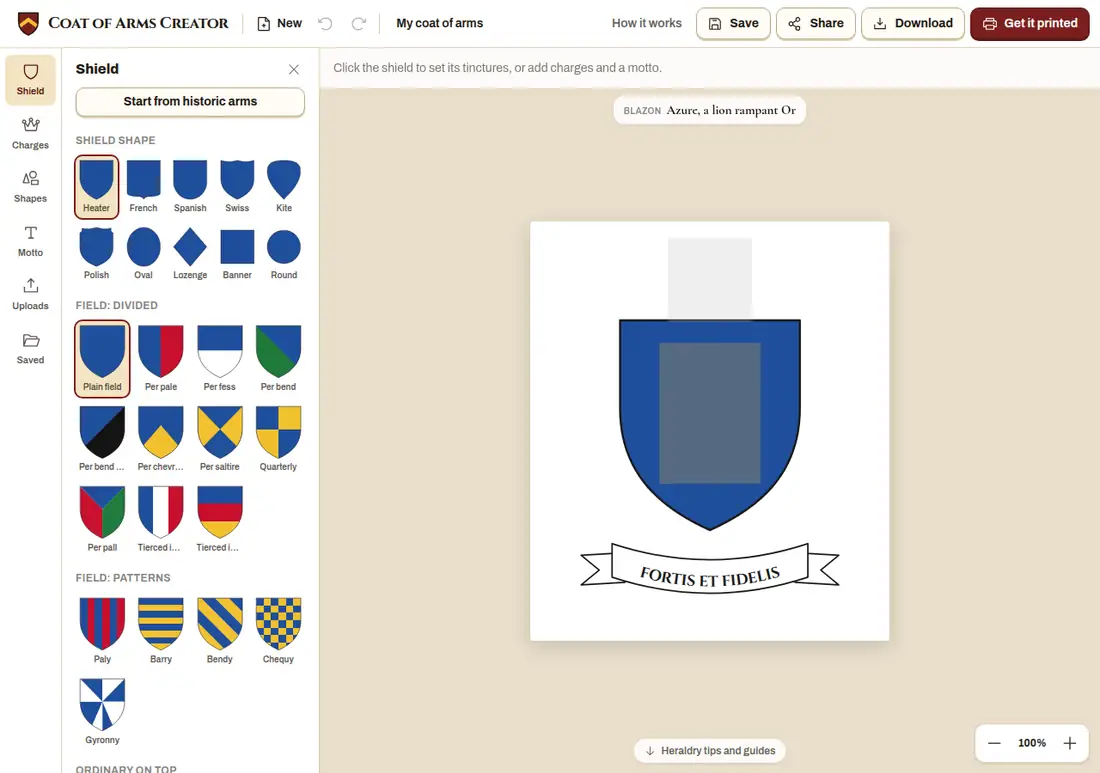
Every engraver will ask for finished artwork, so make that first. The free Coat of Arms Creator maker on the home page lets you build a shield, pick charges and export clean line art you can hand straight to a jeweller, then print it at face size to see what holds.
Frequently asked questions
What is a family crest signet ring?
It is a ring with a flat or slightly domed face carrying your coat of arms. The oldest version is a seal: the design is cut into the metal in reverse so it leaves a readable impression in wax. Most rings sold now are worn as jewelry, with the arms cut into the face or raised above it.
Which finger do you wear a family crest ring on?
By British custom, the little finger of the left hand, which is where the name pinky ring comes from. In other countries people wear it on the ring finger of either hand. No rule binds you. Remember that little fingers measure smaller, so a pinky ring usually has a smaller face and holds less detail.
How much detail fits on a signet ring?
Less than most people expect. Faces are commonly around 10 to 16 mm across, so a full achievement will not read. Motto lettering goes first, then mantling, supporters and fine shading. Print your artwork at the exact face size the maker quotes. Whatever you can still recognise on paper is what will survive in metal.
Can women wear a family crest ring?
Yes. Family crest rings for women are the same object as rings for men, usually with a smaller or narrower face and a lighter shank. Historic practice in some countries limited arms to men, but a ring is jewelry, not a grant. If you are designing your own arms, you decide who wears them.
What file does a ring engraver need?
Vector line art, drawn in black on white with no gradients or soft shadows, plus a proof printed at the actual face size. Vectors scale down without blurring and give a cutter clean paths to follow. Send a short note saying which elements must survive, and ask the engraver to confirm before any metal is cut.