
Family Crest Ireland and Scotland: How Each System Works
A family crest in Ireland and Scotland follows two different rulebooks. See how the Lord Lyon, clan crest badges and the Chief Herald of Ireland each really work.
By the Coat of Arms Creator team
A family crest in Ireland belongs to a person, not to a surname, and Scotland takes the same view while enforcing it much more strictly. Ireland records and grants arms through the Chief Herald of Ireland in Dublin. Scotland does it through the Court of the Lord Lyon in Edinburgh, which is a working court of law rather than an advisory office.
So when a shop sells you the “Murphy family crest” or the “MacLeod family crest,” you are buying artwork. Neither office recognises arms owned in common by everyone of a name, which is the same answer you get for any surname anywhere.
Two systems, two sets of rules
| Scotland | Republic of Ireland | |
|---|---|---|
| Authority | Court of the Lord Lyon, Edinburgh | Chief Herald of Ireland, Dublin |
| Standing | A court within the Scottish justice system | A state office at the National Library of Ireland |
| Who holds arms | One named person at a time | One named person, or a body |
| How relatives get arms | Matriculate a differenced version | Apply in their own right |
| Group badges | Clan crest badge worn by members | No equivalent badge system |
If you searched for a family crest in the UK, note that there is no single UK authority. The College of Arms in London covers England, Wales and Northern Ireland, and the Lord Lyon covers Scotland under separate law.
Scotland, the Lord Lyon and matriculation
In Scotland a grant of arms goes to one living person. That person’s arms are entered in the Public Register of All Arms and Bearings in Scotland, a register that has been kept since the seventeenth century. Scots law makes unauthorised use of another person’s arms an offence, which is why Scotland is often called the strictest heraldic jurisdiction in Europe. The background is set out in the Wikipedia entry on the Court of the Lord Lyon.
Relatives do not inherit a shared copy. They matriculate, which means they register their own version with a small change added to mark their branch.
- Show a documented descent from the person whose arms are recorded.
- Petition the Lyon Court.
- The Lord Lyon adds a difference, often a bordure in a chosen colour, or a change to a charge.
- The new version is recorded in the register under that person’s name.
That system of marked differences is called cadency, and Scotland uses it more consistently than most countries.
Clan crest badges versus a coat of arms
This is where most confusion starts. A Scottish clan member can wear a crest badge: the chief’s crest ringed by a strap and buckle, usually with the chief’s motto. The strap and buckle is the point. It says you follow the chief, and that the crest inside is not yours.
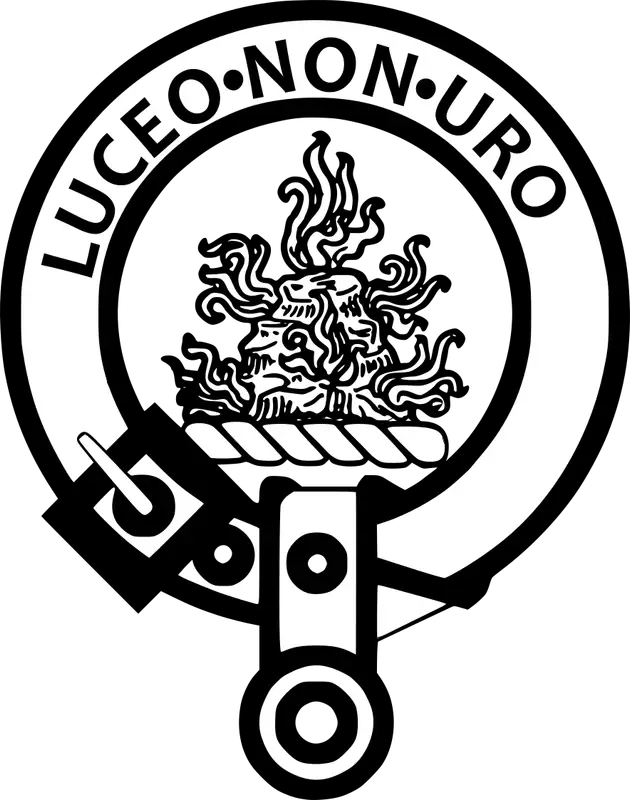
The chief shows the same crest inside a plain circlet instead, with feathers behind it for rank. So a Clan Donald badge on a cap is a statement of allegiance, not ownership of arms. The difference between a crest and a whole shield is covered in the family crest vs coat of arms guide.
Ireland and the Chief Herald
Until the 1940s, heraldry for the whole island ran through Ulster King of Arms in Dublin Castle. The authority for the Irish state then passed to a new office, which became the Chief Herald of Ireland, based at the National Library of Ireland. Northern Ireland stayed with the London side, under Norroy and Ulster King of Arms.


The Chief Herald grants arms to individuals and to corporate bodies such as councils, schools and companies. The office has also confirmed arms in cases where a line could prove long documented use by direct ancestors. Policy on confirmations has shifted over the decades, so ask the office directly about current practice before you plan around it. Our page on making a coat of arms official explains what any grant process involves.
Sept names and shared arms
Irish surnames spread wide and early. A sept was a branch of a wider family group, often tied to one district, and names like O’Brien, Kelly and Murphy belong to several unrelated lines across different counties. One shield could never cover them all.
Old Victorian and Edwardian surname books listed one design per name anyway. Those attributed arms are where almost every modern “Irish family crest” print comes from. They are good history of what somebody once recorded, and poor evidence that it was your ancestor. That is worth knowing before you buy a coat of arms from a surname database.
Researching an Irish or Scottish line
Work from the person backwards, never from the name forwards.
- Build a documented tree with civil records, parish registers and census returns.
- Find the earliest named ancestor you can prove, with a place attached.
- Check whether that person or their direct line appears in a heraldic register, not a surname index.
- For Scotland, search the public register through the Lyon Court. For Ireland, ask the Office of the Chief Herald.
- If nothing is recorded, you have a clean answer, not a dead end.
The steps for finding a family coat of arms go into more detail on sources.
Making your own design on the same principles
No grant, no problem. In both countries you are free to design arms for yourself as personal artwork, as long as you do not claim a grant you do not hold or copy someone’s registered shield.
Good design follows the same craft rules the heralds use. Keep metal off metal and colour off colour, which the rule of tincture explains. Use few charges and strong shapes so the design still reads at the size of a signet ring. Decide which parts of a coat of arms you want, and leave out supporters and coronets, since those are reserved marks of rank.
If your line is Irish or Scottish, borrow meaning rather than copying a shield. A saltire, a red hand, a galley, a salmon or a local plant can say where you come from without pretending to be a grant.
Design yours in Coat of Arms Creator
Pick your colours, divisions, charges, crest and motto in Coat of Arms Creator and download the result for print or engraving. It is free, and it keeps the heraldic rules in view while you build.
Frequently asked questions
Is there an official family crest for Ireland?
No. The Chief Herald of Ireland grants arms to a named person or to a body such as a council or university, not to everyone who shares a surname. Two unrelated families called Kelly can each hold different arms. The printed "Irish family crest" you see on mugs and signs is usually an attributed design copied from an old reference book.
Are family crests Irish or Scottish in origin?
Neither. Heraldry started in western Europe in the twelfth century as a way to identify armoured knights, and it reached Ireland with the Anglo-Normans. Scotland and Ireland later built their own rules and record offices around it. What is distinctly Scottish is the clan crest badge, worn by clan members to show allegiance to a chief.
Who controls heraldry in Scotland?
The Court of the Lord Lyon in Edinburgh. It is a real court inside the Scottish justice system, so using arms you do not hold can be prosecuted. The Lord Lyon grants new arms, records them in the Public Register of All Arms and Bearings in Scotland, and gives relatives a differenced version through matriculation.
Who handles a family crest in the UK?
Two offices. The College of Arms in London covers England, Wales and Northern Ireland, with Norroy and Ulster King of Arms responsible for Northern Ireland. The Court of the Lord Lyon covers Scotland and has its own statute law. Both grant arms to individuals and corporate bodies, never to a surname as a group.